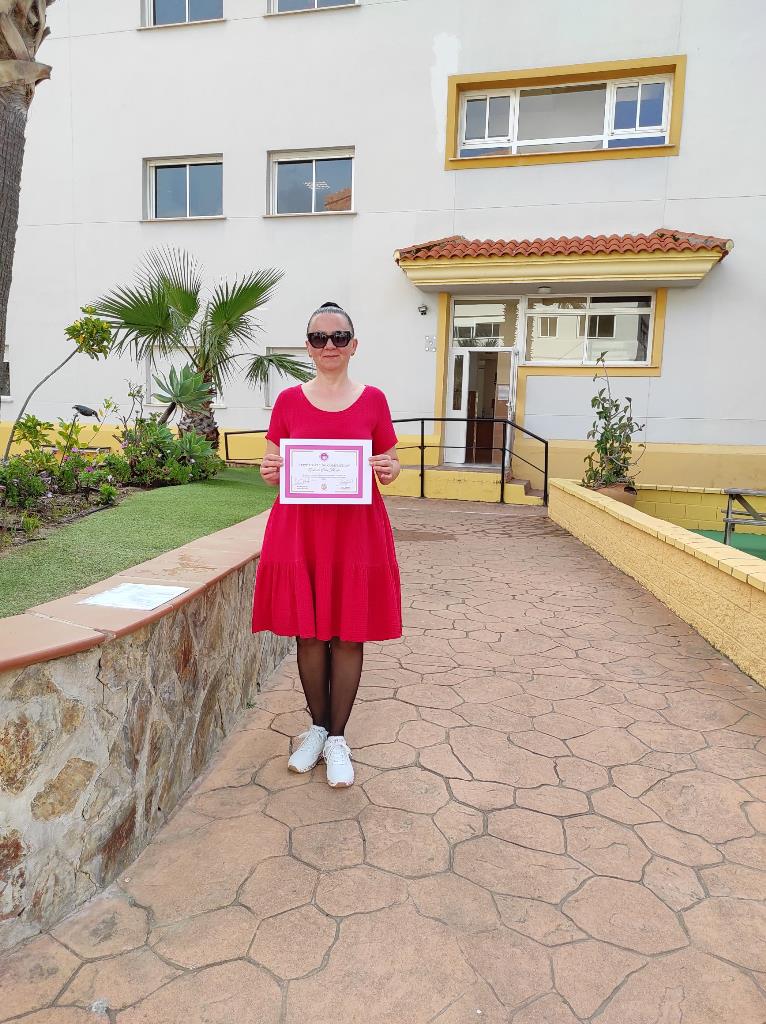
From March 14 to 21, 2026, Gabriela Olea Martin, the Erasmus+ project coordinator at the 1st General Secondary School in Kielce, participated in a job shadowing experience at a British, international, bilingual secondary school in Benalmádena. The mobility was funded by the European Union.
The main objective of her visit was to learn about the organizational structure of a Spanish secondary school, the working methods of teachers, and the teaching approaches used across different areas of education. The mobility enabled her to attend classes, meet with the school management, and engage in discussions with teachers, which provided her with a broad perspective on how the Spanish education system functions in practice.
Her stay in Benalmádena began with a meeting with the Erasmus program coordinator, during which the fundamental principles of the school’s operation, its organizational structure, and the planning of educational processes were discussed. She was also introduced to the institution’s educational philosophy, based on an individual approach to each student, supporting personal development, and building a partnership-based teacher–student relationship.
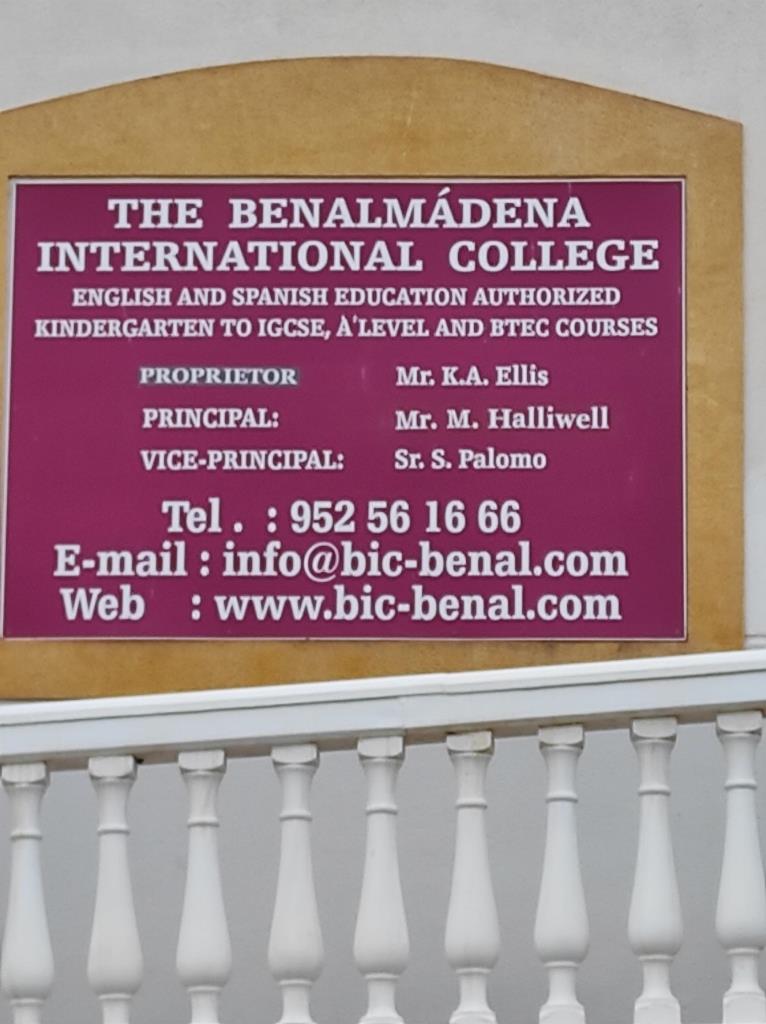
The school where she carried out her mobility – Benalmádena International College – is a private international school implementing the British curriculum (UK National Curriculum), supplemented with elements of the Spanish program. Education covers all stages – from Early Years (pre-school education), through Primary and Secondary, up to Sixth Form, which prepares students for A-level examinations.
The teaching system at the school is coherent and progressive – at the early stages, particular emphasis is placed on social and communication development, as well as learning through experience and play. In later years, students follow a broad and balanced curriculum including English, mathematics, sciences, humanities, arts, and physical education, while simultaneously developing critical thinking and problem-solving skills.
An important aspect of education is bilingualism – most classes are conducted in English, while Spanish is taught daily, which supports the development of high-level language competence and prepares students to function in an international environment.
At the secondary level, students are prepared for IGCSE and A-level examinations, which are internationally recognized and enable them to pursue higher education in Spain, the United Kingdom, and other European countries. Thanks to the combination of British and Spanish curriculum elements, students can obtain qualifications recognized in both educational systems.
The school operates in an international environment – students of many nationalities study there, which fosters the development of intercultural competencies, openness, and preparation for life and work in a global society. The institution also places strong emphasis on student wellbeing, building self-confidence, and holistic development – not only academic, but also social and emotional.
She became familiar with the teaching staff and the functioning of teacher teams. The methods and forms of work used were discussed, including the particular importance of formative assessment and project-based learning. She was also introduced to digital tools used daily in teaching – especially educational platforms, electronic gradebooks, and applications used for teamwork, online testing, and monitoring student progress.
During the mobility, she participated in observations of many lessons at different educational stages and across various courses. These observations included both language and general education subjects. She attended Spanish, English, and physics classes, where she was able to observe the specific nature of teacher–student interaction. Each lesson allowed her to explore a different aspect of a Spanish teacher’s work.
The widespread and natural use of information technology was particularly noticeable – students used computers, digital platforms, and interactive teaching materials. She also noted the frequent use of group work, discussions, and activating methods, which contributed to greater student engagement in the learning process.
Another important element of the observed classes was the high level of student independence and encouragement to express their own opinions and present the results of their work. Teachers acted as guides and facilitators of the learning process, supporting students in developing critical thinking, collaboration, and responsibility for their own learning.
The mobility provided her with many inspirations regarding school organization, teaching methods, and the use of digital technologies in education. The experience gained constitutes a valuable source of knowledge that can be applied in everyday teaching practice and in planning new educational solutions in her institution.