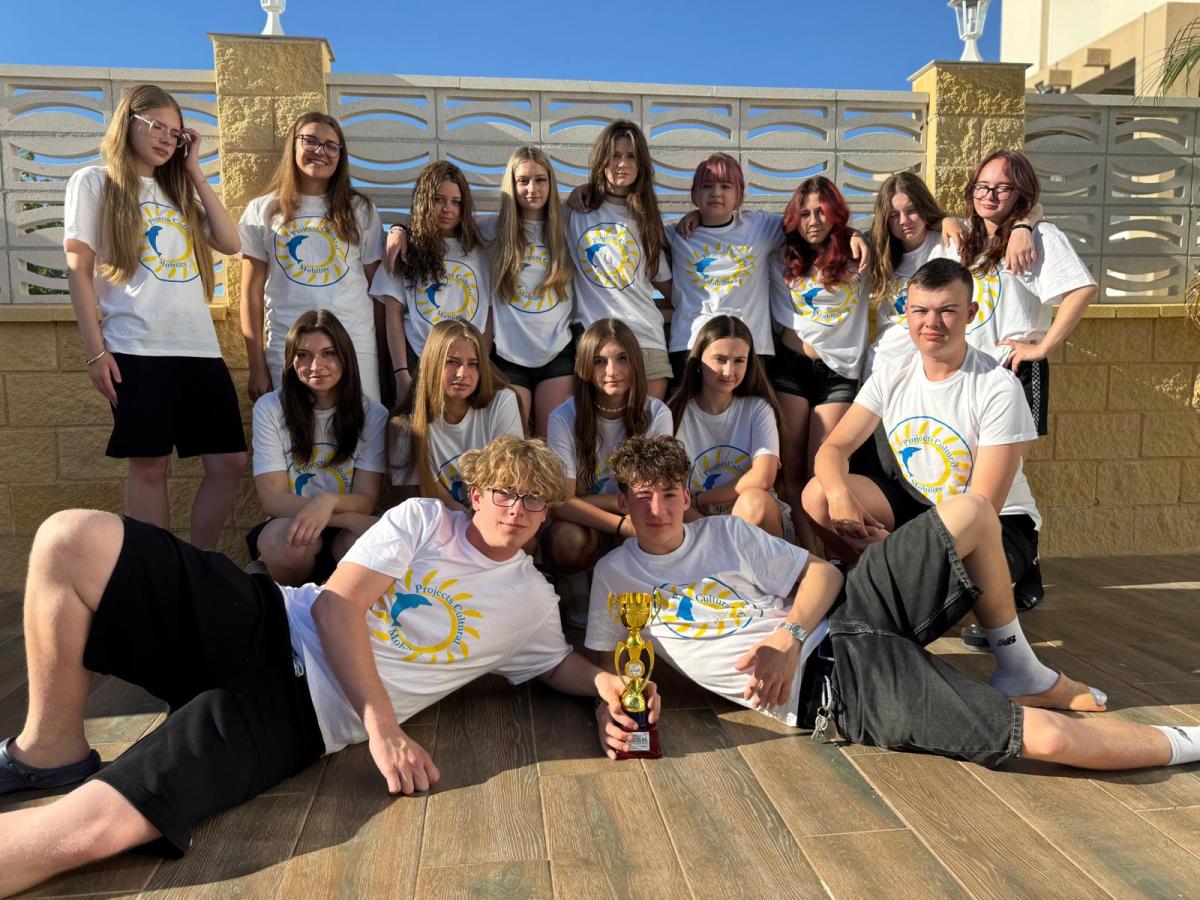
From 16–23 May 2026, a group of 16 second-grade students, accompanied by four teachers – project coordinator Gabriela Olea Martin and teachers Anna Pacak, Grzegorz Biskupski, and Marcin Przytuła – participated in a student mobility project in Torrox Costa, co-funded by the European Union. The trip took place within the framework of the accreditation granted for the years 2021–2027.
During their stay, the students took part in communication classes in Spanish, English, and modern technologies held at a school in Nerja. The school is a modern educational institution providing upper secondary education and placing strong emphasis on the development of language and digital competences as well as international cooperation. It implements numerous European projects supporting student and teacher mobility and intercultural integration.
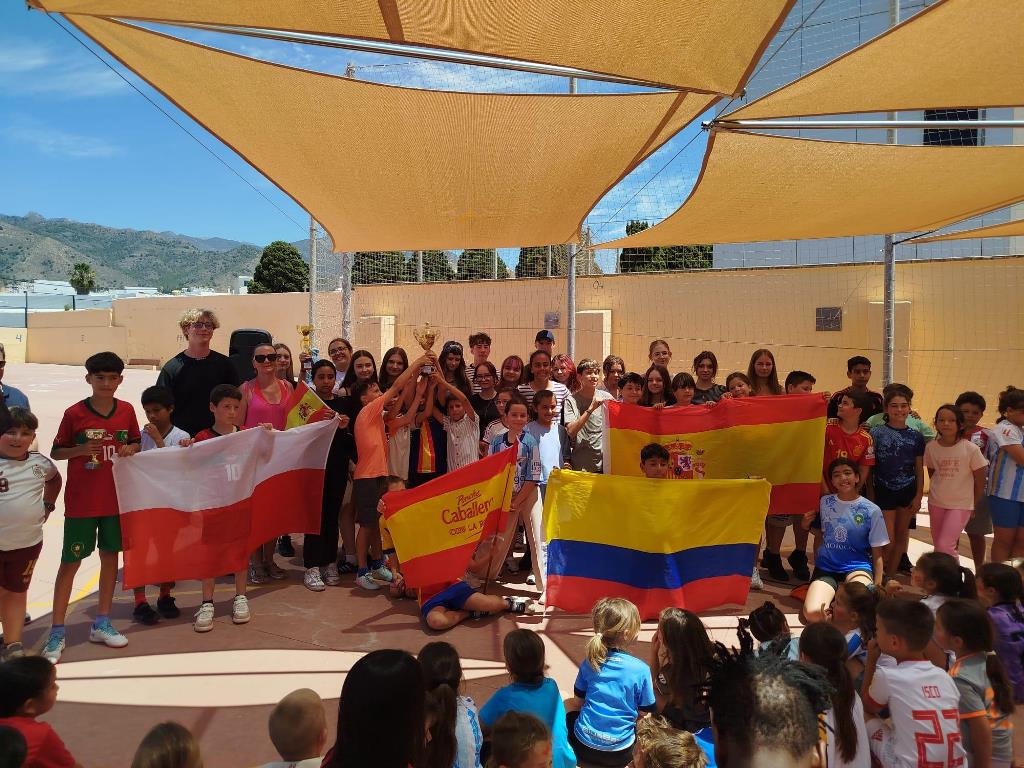
Together with Spanish students, the participants prepared video presentations about their country, city, and school. They also completed communication tasks in Spanish and English aimed at improving speaking skills and communication in foreign languages, as well as learning about Spanish culture. The students also participated in sports activities that promoted group integration. They took part in a football tournament and won 3rd place, bringing home a trophy for I LO.
Together with students from the Spanish school, they attended mathematics and English classes, danced the Belgian dance and the cowboy dance, and carried out joint musical activities. Students from I LO also participated in Spanish language classes, and exposure to the language was constant – both during lessons and while taking part in excursions, visiting restaurants, or shopping.
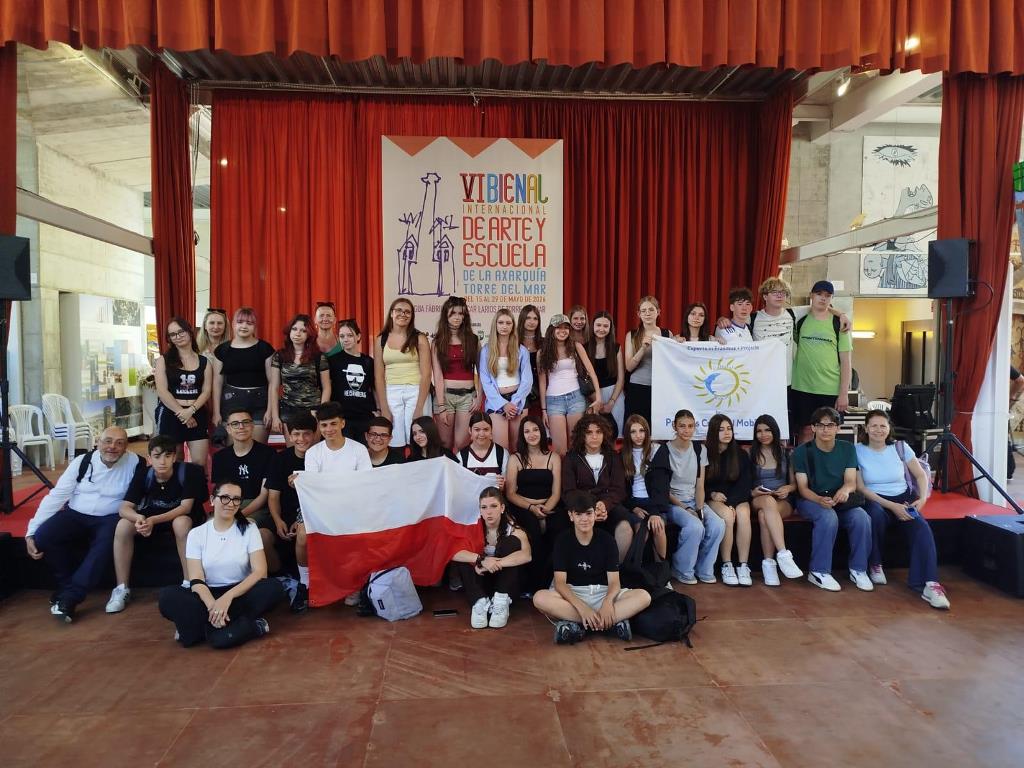
During their stay, the students also participated in events organized as part of the 6th International Biennial of Art and School of Axarquía in Torre del Mar. The event brought together around 50 educational institutions from Andalusia and other European countries and provided a space for presenting artistic activities, creativity, and international youth cooperation. Participation in the biennial enabled the students to discover new forms of artistic expression and exchange experiences with peers from other countries.
After classes, the students took part in trips to Córdoba, Málaga, Torre del Mar, and Nerja. They had the opportunity to taste traditional Spanish dishes and learn more about the history and culture of Andalusia.
Participation in the mobility project brought many educational and social benefits to the students. Above all, they significantly improved their language competences, overcame communication barriers, and gained greater confidence in using foreign languages in everyday situations. Direct contact with peers from another country helped them develop teamwork skills, openness, tolerance, and intercultural understanding. The students also improved their digital competences through the creation of multimedia materials and developed creativity during artistic and project-based activities. The mobility experience also contributed to increasing the students’ independence, adaptability to new environments, and responsibility for their own actions.
For many participants, it was a valuable life experience that broadened their horizons and motivated them to continue their educational development and participate in future international initiatives.